A polished homepage can introduce a business. It cannot, on its own, answer every question a potential client has before getting in touch.
We rebuilt our own website to close that gap: explain the services more clearly, give visitors useful material to explore, and make publishing sustainable for a small team. This is an internal project, not a commissioned client engagement.
Project at a glance
- The problem: one English page had to carry the entire offer, with no dedicated service pages or publishing system.
- The approach: keep the technical visual identity, organize the site around visitor questions, and generate multilingual content pages from version-controlled files.
- The deliverable: a six-language homepage, three services in English and Chinese, and a bilingual blog and case-study system hosted on Cloudflare Pages.
- The verified output: 52 articles in each of English and Chinese, six service-detail pages, two language versions of this case study, and 119 URLs in the generated sitemap as of November 4, 2026.
Those are delivery and content figures, not evidence of increased traffic, search rankings, or sales. The sections below show what changed and what a visitor can check.
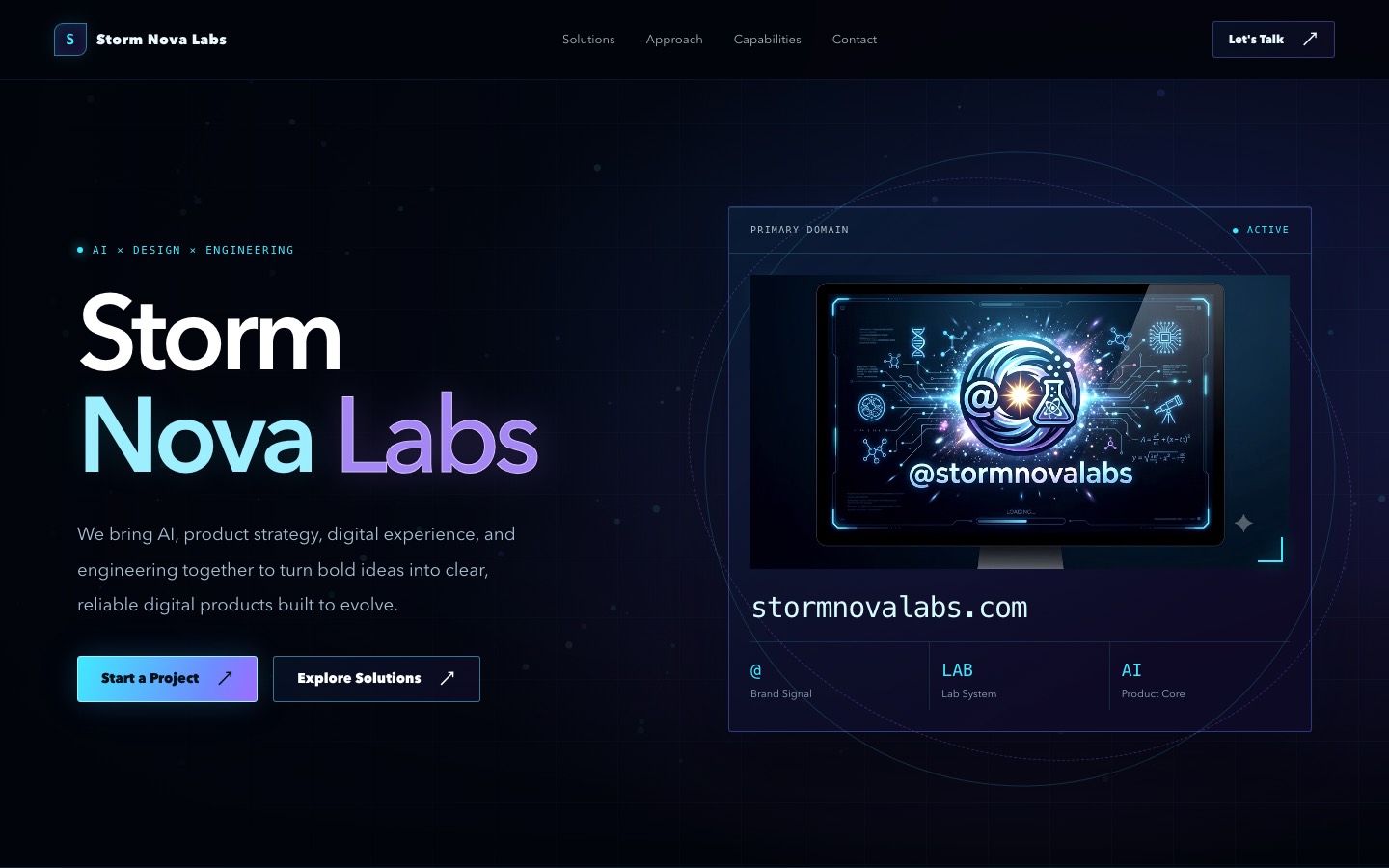
Before: an attractive site with a limited customer journey
The earlier site already had a dark technical aesthetic and an animated hero. Its limitation was not simply appearance: the visitor had few ways to investigate the offer.
Everything lived on a single English page. Service descriptions were broad, and there were no dedicated articles or case pages to explain how a project might work. The original project record also identified missing search foundations, including a sitemap and correct handling of nonexistent pages.
For a buyer, that left practical questions unanswered: Is this service relevant to my team? What would a first project include? What should I send in an inquiry?
The brief: make the next step easier
We set five priorities:
- Explain who the services are for and what each one delivers.
- Give visitors a useful path from a question to a relevant service.
- Support additional languages without implying that every page is translated into all six.
- Make content updates repeatable and reviewable.
- Keep hosting and maintenance proportionate to a small business website.
We retained the existing brand direction rather than treating a new visual style as the entire solution.
What we built
A homepage organized around decisions
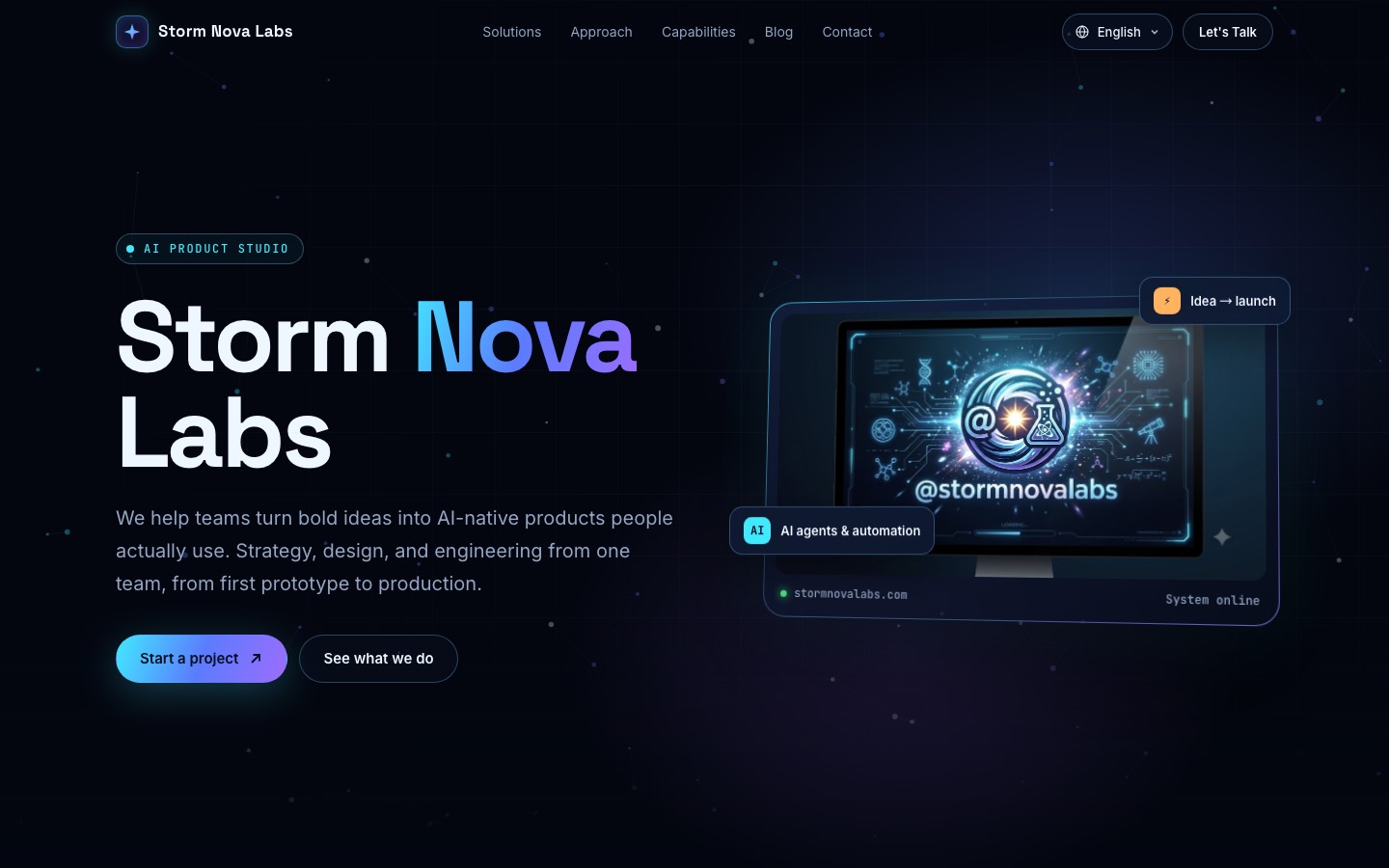
The homepage brings together a direct positioning statement, three service areas, practical starting points, a delivery process, common questions, and a contact section. The intention is to help a visitor understand the offer before asking them to start a conversation.
The visual refinements support that structure: clearer typography, distinct service cards, restrained cyan and violet accents, and responsive layouts. The screenshots in this case show stages of the project; the live pages remain the reference for the current design.
Dedicated service pages
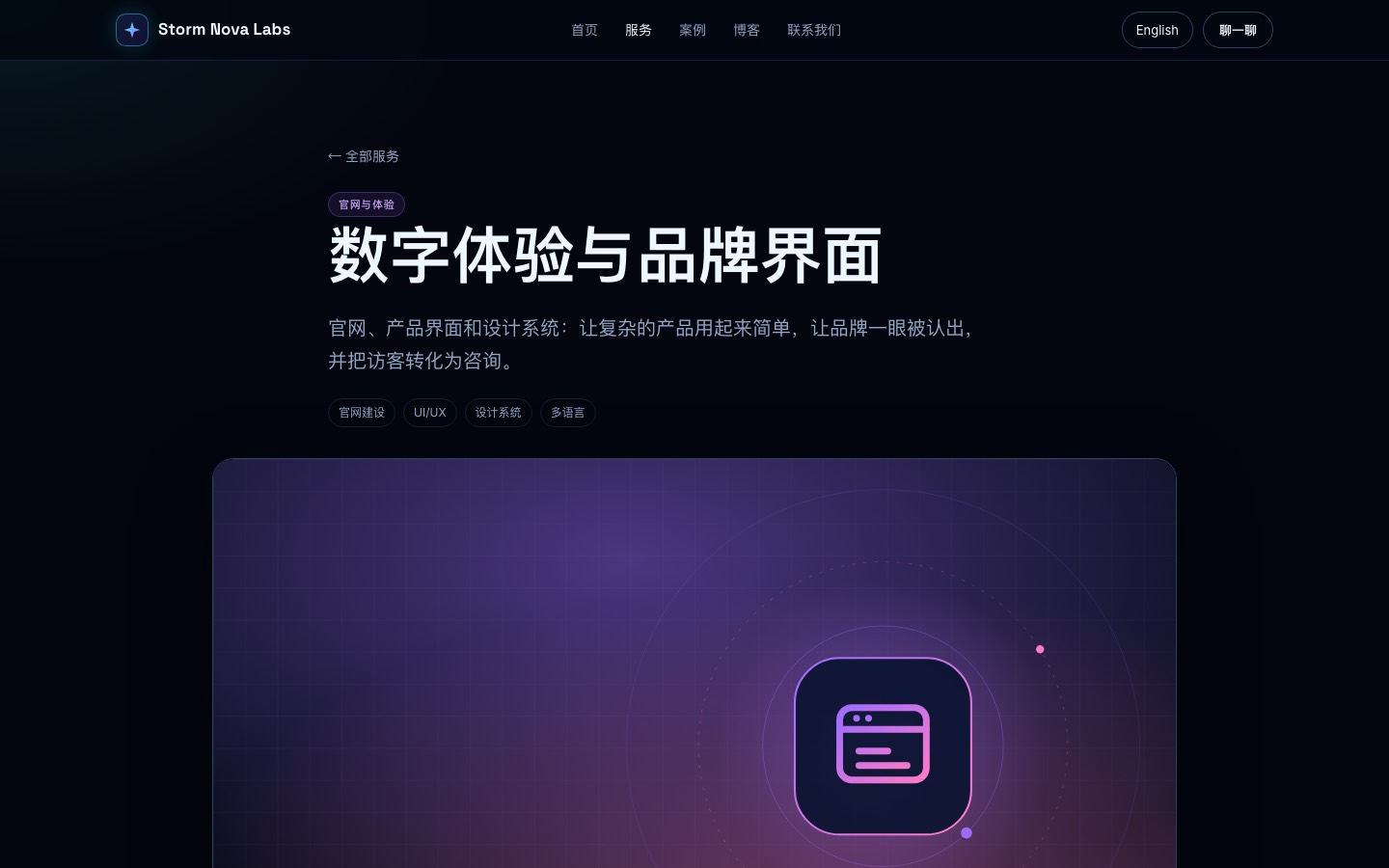
Each service has its own English and Chinese page, covering suitable projects, deliverables, the working process, and common questions. Articles link to the relevant service instead of leaving visitors at a dead end.
Explore the live AI products and agents, digital experiences, and prototyping and delivery pages.
A practical language scope
The homepage supports English, Simplified Chinese, Traditional Chinese, Japanese, Korean, and French. It offers a language selector and remembers a visitor's choice.
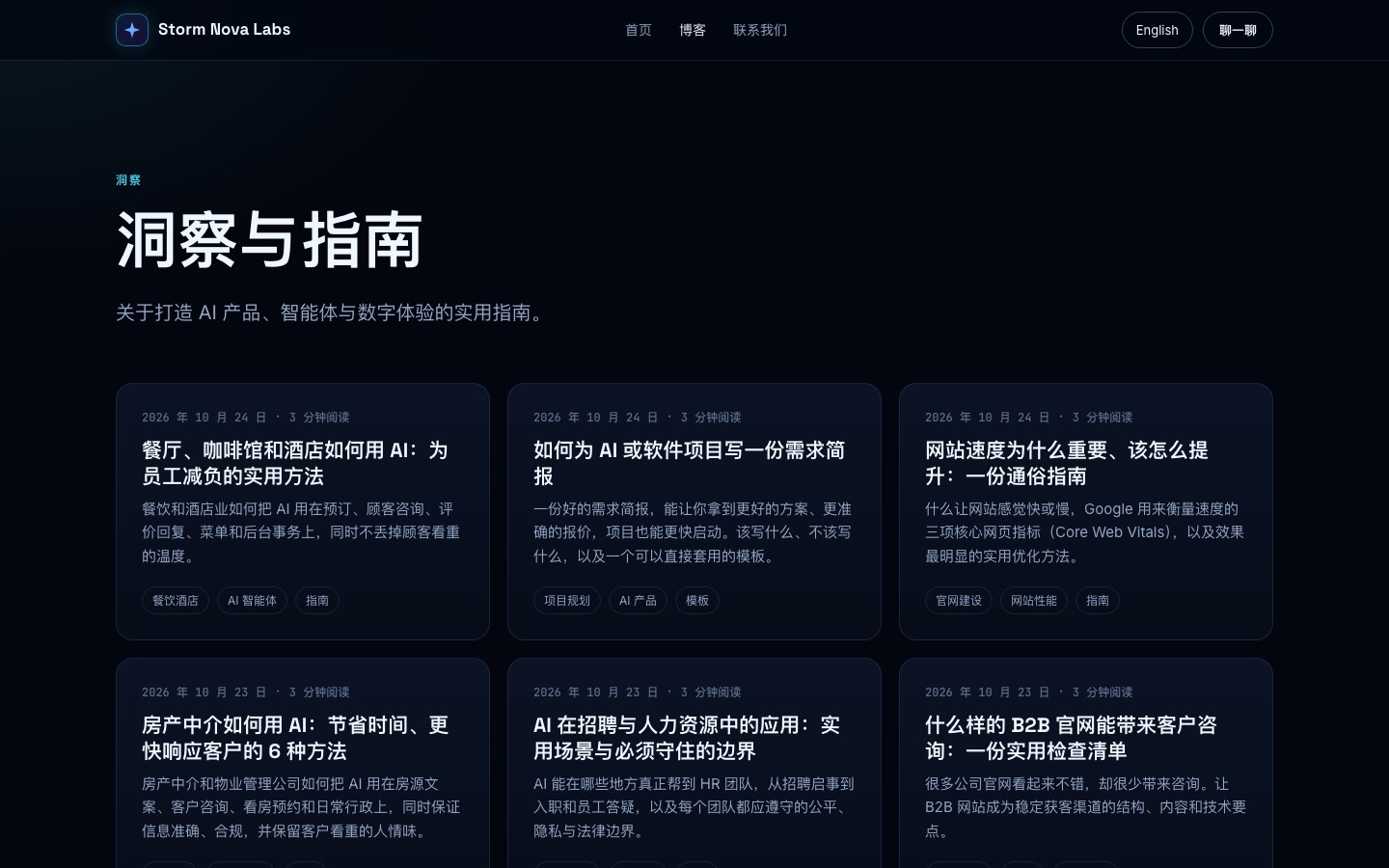
Service pages, articles, and this case study have English and Simplified Chinese versions. Those paired content pages use separate URLs and language-alternate links. A six-language homepage should not be mistaken for six complete translations of the entire site.
A content system the team can keep using
Articles are maintained as Markdown files, one file per language. The site's build script generates the article pages, listings, related links, and latest-content sections. It also produces the sitemap and article metadata, avoiding the need to update each list by hand.
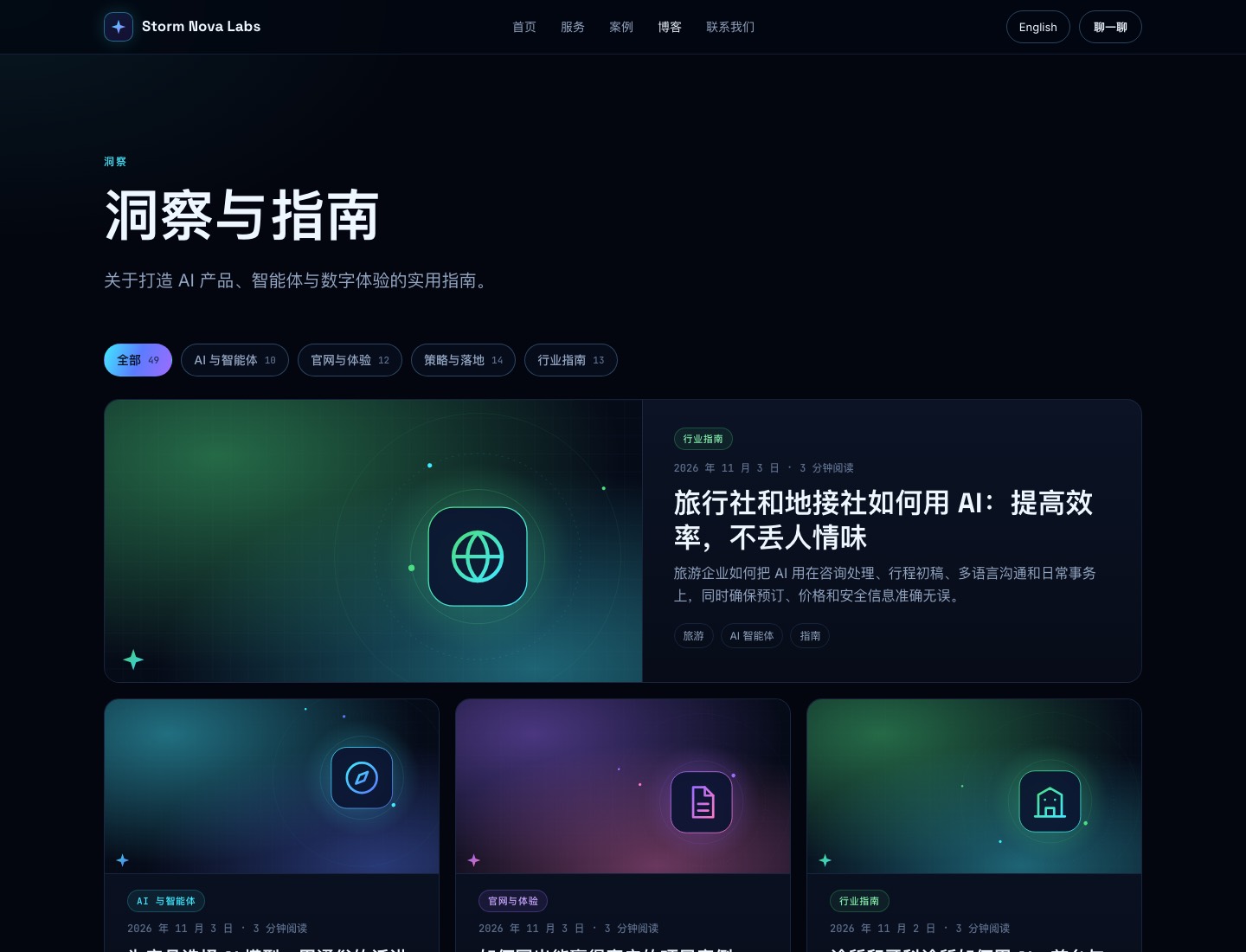
As the library grew, we added category filters, a featured article, generated topic covers, an article table of contents, and a reading-progress indicator. These features make the library easier to browse; they are not a substitute for useful writing.
Hosting independent of a local computer
The built site is served by Cloudflare Pages. Visitors do not need our laptop to be on, and this implementation does not require an application server or CMS database to render its pages.
Static delivery reduces the server-side components the team maintains. It does not eliminate security responsibilities: domain access, hosting accounts, repository permissions, third-party resources, and the deployment process still need care.
How changes move from draft to live
GitHub is the source of truth. We prepare changes against the current repository version, build the site, check generated pages and links, and use a preview for review when needed. After approval, the source is committed and the approved build is deployed to production. The final check is the custom domain, not just a successful upload message.
A preview URL is a review location, not automatically a private or access-protected environment. Likewise, version history makes changes traceable, but avoiding conflicting edits still requires checking the latest source before publishing.
AI assists with drafting, translation, and implementation. Review and release approval remain explicit parts of the process.
What we can demonstrate today
As of November 4, 2026, the current source and a fresh build contain:
- 52 article topics, each in English and Chinese: 104 article pages, not 104 distinct topics.
- Three bilingual services: six service-detail pages.
- One internal case study in two languages.
- Six homepage languages, with the more limited content-language scope described above.
- 119 sitemap URLs, including the homepage, collection listings, and detail pages.
A sitemap lists pages for discovery; it does not confirm that a search engine has indexed them. Readers can inspect the blog library, Chinese blog, and sitemap directly.
Historical performance measurements
The previous case-study record reports an October 2026 mobile PageSpeed test with scores of 90 for performance, 97 for accessibility, and 100 for best practices and SEO. It also records an earlier performance score of 74 and a main-content timing improvement from 5.6 to 2.9 seconds after image and font-loading changes.
These are retained historical project notes, not new test results. The measurements have not been rerun for this update, and an archived test report is not attached here. They should not be read as a guarantee of the current score or every visitor's experience.
What we are not claiming
This case does not establish an increase in qualified inquiries, revenue, or organic traffic. Those outcomes need an agreed baseline, an observation period, and reliable analytics. More published pages alone do not prove business growth.
What this approach can offer another small team
The transferable part is the combination: a clearer offer, useful content, a complete path to contact, and a publishing process that the team can maintain. This approach is worth considering when updates are mostly editorial and the site does not need visitor accounts or complex transactions.
A business that needs an online store, member dashboard, or frequently changing database-backed features may need a different architecture. The right starting point is the customer journey and operating needs, not a commitment to a particular tool.
Start with the page that matters most
If your website looks credible but leaves visitors unsure what to do next, start by reviewing one service page and the path from that page to an inquiry.
Send us your website URL, target audience, and the action you want visitors to take. We can discuss a focused first step without assuming you need a complete rebuild. Explore our digital experiences service or email contact@stormnovalabs.com.